
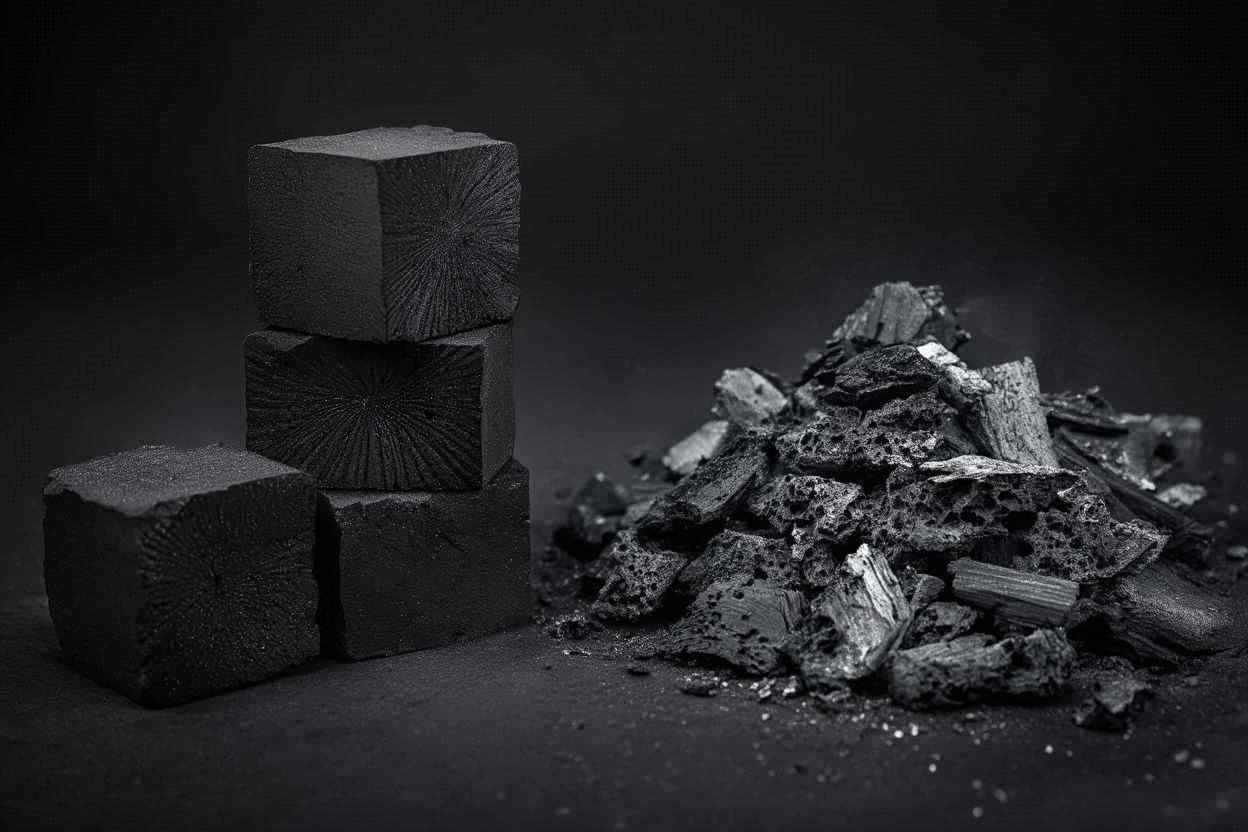
Coconut charcoal vs quick light charcoal is a common comparison among hookah users who want to balance performance and convenience. In general, coconut charcoal is made from natural coconut shells, while quick light charcoal contains chemical additives for instant ignition.
To explore more about charcoal performance, you can visit low ash charcoal vs regular charcoal for hookah and access additional information at evilmutant.com.
Raw Material and Composition
First of all, coconut charcoal is produced from compressed coconut shells without chemical additives. As a result, it offers a more natural and clean burning process.
In contrast, quick light charcoal contains ignition chemicals that allow it to light instantly. However, these additives can affect burning quality and smoke characteristics.
Therefore, the composition of charcoal plays a major role in determining performance and user experience.
- Natural coconut shell material
- Chemical additives in quick light charcoal
- Cleaner combustion in coconut charcoal
- Faster ignition in quick light charcoal
Ignition and Convenience
Next, ignition time is one of the most noticeable differences. Quick light charcoal ignites within seconds, making it very convenient for quick sessions.
On the other hand, coconut charcoal requires a burner and takes several minutes to fully ignite. However, this extra time results in better combustion quality.
Therefore, users must choose between convenience and performance based on their preferences.
1. Ignition Speed
Quick light charcoal lights instantly due to chemical accelerants. Therefore, it is suitable for users who need fast setup.
Meanwhile, coconut charcoal takes longer to ignite but provides more stable results.
2. Ease of Use
Quick light charcoal is easier to use without additional equipment. As a result, it is often chosen for portability.
In comparison, coconut charcoal requires a heat source, which adds preparation time.
Heat Performance and Stability
In addition, heat performance differs significantly between the two types. Coconut charcoal provides stable and long-lasting heat.
Because it burns evenly, users can maintain consistent temperature throughout the session. As a result, fewer adjustments are needed.
On the other hand, quick light charcoal often burns unevenly and produces fluctuating heat. Therefore, it may require constant monitoring.
- Stable heat with coconut charcoal
- Fluctuating heat with quick light
- Longer sessions with coconut charcoal
- Shorter burn duration with quick light
Ash Production and Cleanliness
Moreover, ash production is another key difference. Coconut charcoal produces minimal ash, which helps maintain airflow and reduces cleaning.
As a result, sessions become more efficient and consistent over time.
In contrast, quick light charcoal produces more ash due to chemical content. Therefore, users may need to clean more frequently.
- Low ash in coconut charcoal
- Higher ash in quick light charcoal
- Cleaner sessions with coconut charcoal
- More residue with quick light
Impact on Flavor and Experience
Furthermore, charcoal type directly affects flavor quality. Coconut charcoal burns cleanly without producing strong odors.
Therefore, users can enjoy pure shisha flavor without interference.
In comparison, quick light charcoal may release chemical smells during ignition and use. As a result, it can affect taste and reduce session quality.
Which One is Better
Finally, coconut charcoal is generally the better choice for users who prioritize performance, stability, and clean flavor.
Quick light charcoal is suitable for convenience and quick setup, but it sacrifices quality and consistency.
Therefore, for regular and high-quality sessions, coconut charcoal remains the preferred option.
Conclusion
In conclusion, coconut charcoal vs quick light charcoal shows clear differences in ignition, heat stability, ash production, and flavor impact. Each type serves different purposes based on user needs.
By choosing the right charcoal, users can improve session quality, maintain better heat control, and achieve a more enjoyable hookah experience.
